
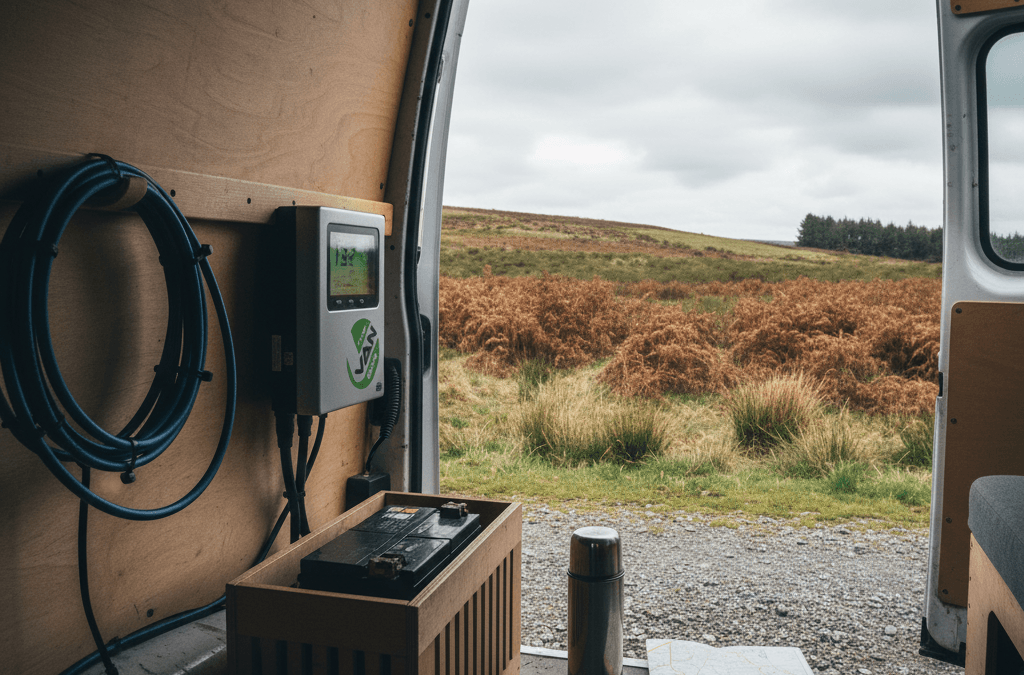
Van Life Electrics: Solar, Hook-Ups & Battery Management
There’s a moment every van lifer knows well. You’re parked up somewhere beautiful, the kettle’s on, and then the low battery warning flashes across your phone screen. Or worse, your leisure battery gives up entirely and takes your lighting, fridge, and phone charger with it. It’s a situation that’s entirely avoidable with the right electrical setup, and once you understand the basics, managing power on the road becomes second nature.
Whether you’re a weekend warrior heading out for two nights or a full-timer living entirely off-grid, getting your van’s electrics sorted is one of the most important investments you’ll make in the lifestyle.
Understanding Your Power Sources
Most van and motorhome setups rely on three main ways to generate and maintain power: solar panels, mains hook-ups, and leisure batteries. These three work together, and understanding how they interact is the key to never being caught short.
Leisure batteries are the heart of your van’s electrical system. Unlike your starter battery (which exists purely to fire up the engine), leisure batteries are designed for slow, sustained discharge and regular recharging. They power everything from your lighting and water pump to your fridge, devices, and any appliances you’re running through an inverter.
Solar panels feed energy back into your leisure battery during daylight hours. A modest 100W panel can keep a well-managed system topped up during summer months, while many full-time van lifers run 200W to 400W or more to handle higher consumption.
Mains hook-ups (also known as EHU, or electric hook-up) connect your van directly to a site’s power supply, usually via a 16-amp cable. When you’re on a managed campsite offering hook-ups, this is the simplest way to keep everything charged and run appliances you couldn’t normally use off-grid.
Choosing the Right Leisure Battery
Not all leisure batteries are equal, and this is one area where quality genuinely matters. The three most common types you’ll come across are:
AGM (Absorbent Glass Mat) batteries are a solid, widely available option. They handle regular cycling well, are maintenance-free, and can tolerate being discharged to around 50% without too much long-term damage.
Gel batteries are similar in many respects but can be slightly more forgiving in certain temperature conditions. They’re also sealed and maintenance-free.
Lithium (LiFePO4) batteries are the premium choice and increasingly popular among our community. They’re lighter, last significantly longer, and can be discharged to around 80-90% of their capacity without the damage that would compromise an AGM battery. The upfront cost is higher, but the long-term value is genuinely compelling for anyone spending serious time in their van.
As a rough guide, think about what you actually use on a typical day. A 12V compressor fridge might draw around 30-50Ah per day. LED lighting across your van might add another 5-10Ah. Add your phone charging, a laptop, and a water pump, and you’re comfortably looking at 60-80Ah of daily consumption, minimum. Size your battery bank accordingly, and always err on the generous side.
Making the Most of Solar
Solar is one of the most satisfying parts of van life electrics because once it’s working, it’s working silently in the background every single day. A well-sized solar setup paired with a quality MPPT charge controller (far more efficient than older PWM controllers) means you can often go days or even weeks without needing a hook-up.
That said, solar has its limits. In the UK, winter months and overcast periods can significantly reduce your generation, so it’s worth planning for those lower-output days. Running power-hungry appliances, like a hair dryer or a microwave via an inverter, will drain your battery far faster than solar can replenish it unless you’re running a substantial array.
A few practical tips our members swear by:
- Keep panels clean. Dust and grime can reduce output by a noticeable margin. A quick wipe-down every couple of weeks makes a real difference.
- Angle matters. If you’re stationary for a day or two, try to position your van so panels face south and aren’t in shadow.
- Monitor your system. A decent battery monitor (a Victron BMV or similar) gives you real-time data on your state of charge, current draw, and solar input. It removes the guesswork completely.
Managing Consumption Wisely
The most reliable power system is one you actively manage. This isn’t about going without; it’s about knowing your usage patterns and making small adjustments that add up to significant gains.
LED lighting is a straightforward swap that slashes your lighting load. If your van still has incandescent or halogen fittings, replacing them with LEDs is one of the first things worth doing.
12V appliances are far more efficient than running 240V appliances through an inverter. Every time you convert DC to AC, you lose a percentage to heat. If you can run something directly from 12V, do it.
Backup charging through your van’s alternator while driving is another useful top-up source. A quality B2B (battery-to-battery) charger routes charge from your starter battery to your leisure battery efficiently while the engine runs, making longer drives doubly productive.
During extended wild camping or particularly grey winter weeks, having power banks charged and ready keeps your essential devices running even if your main battery needs babying.
Hook-Ups: Getting Connected on Site
If you’re staying on a managed campsite with hook-up facilities, the process is straightforward. You’ll need a 16-amp EHU cable with the correct CEE17 blue connector, an RCD adaptor for safety, and a basic understanding of your van’s consumer unit (if fitted). When connected, your on-board charger will replenish your leisure battery and power your 240V sockets simultaneously.
One thing worth noting: the amperage available on a campsite hook-up is finite. Running a kettle, a heater, and a hair dryer at the same moment can trip the site’s circuit. Be mindful of what you’re drawing at any one time, particularly in colder months when electric heating tempts everyone to push the limits.
The Bigger Picture
Getting your electrics right isn’t just a technical exercise; it’s what gives you genuine freedom on the road. A reliable, well-sized system means you can park somewhere extraordinary for three days without worrying about battery levels. It means keeping food fresh, staying connected, and spending evenings exactly as you want rather than rationing power.
At events and rallies across our community, the conversations around van electrics are some of the liveliest. Members share what’s worked, what’s failed spectacularly, and what they’d do differently. That kind of real-world knowledge is invaluable, and it’s exactly the sort of thing that brings people together over a cup of tea between sessions.
If you’re ready to connect with a community of experienced van lifers and get access to exclusive discounts on leisure batteries, solar equipment, and vanlife accessories, head over to The Van Club and find out what membership can do for your adventures on the road.

Hiya, we’re looking to add a 210 Solar panel to our MWB Crafter. Any recommendations for fitters in the Leicester area Thanks